

The Story of Prometheus
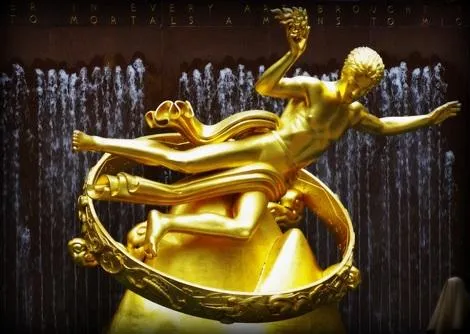
According to Greek mythology, Prometheus was a Titan, endowed with forethought, prophecy and immense intellect, who stood with the Olympian Gods during the conquest of Mount Olympus. It is told that he shaped mankind from clay, forming them to stand upright, to behold the heavens, and to move and reason in the likeness of the Gods themselves. Athena, bright-eyed goddess of wisdom, favored his work and breathed into these forms the breath of life.
In the first age of human existence, men passed their days beneath the shadow of a single, inescapable certainty—death. Naked they wandered, hungry and cold, unlettered and unknowing, ignorant and unenlightened, they endured life as one endures a long vigil before the grave. Prometheus beheld their suffering and judged it unjust. He went before the Pantheon of Gods upon Olympus and implored them to act. Yet they refused him, declaring that if mortals were aided, they would awaken imagination, creativity, and ambition—powers the immortals reserved as their own and would not freely yield.
Mortals, by their very nature, were destined to die. This, Prometheus could not unmake. Still, though he could not wrest death from them, he resolved to grant them hope: hope for a brighter future, for growth and becoming during the span of their earthly travail. With this purpose fixed in his heart, he ascended Mount Olympus by stealth. At the hearth of the Gods he crept unseen, hiding behind the throne of Zeus, and there—beneath the very gaze of the Thunderer—he stole a single spark from the god’s own thunderbolt.
With the spark concealed in a hollow-out fennel stalk, he fled down the mountain with such swiftness that his feet scarcely seemed to touch the earth, as though the winds themselves bore him onward. With that divine flame he kindled fire and summoned the humans to its warmth. He taught them its use, and then he taught them further—through stories told by firelight, through song and measured step, through rhythm and dance. He gave them language, music, art, and movement. In time, he instructed them in sewing and weaving, in metallurgy and carpentry, in architecture and the ordering of cities, in astronomy and mathematics, in the art of writing, in the tending of animals, in navigation and medicine, in prophecy, and in countless other arts and sciences.
Thus the constant dread that once ruled the hearts of men was driven back by light, warmth, and hope. Through fire and learning, Prometheus bestowed upon the earth arts and disciplines that enabled mortals to prolong life and better its quality. That one small spark made all the difference. By that gift, Prometheus raised humanity to a higher station, and imagination, creativity, and ambition—once the sole province of the Gods—became the daily breath and practice of humankind.
“So, to put it in a word, all human arts came from Prometheus.”
(Aeschylus, Prometheus Bound, lines 252, 445, 480, 500–501)
Zeus became angry with Prometheus for making men to be so near the likeness of the Gods. He ordered mankind to make animal sacrifices in order to show they were obedient and worshipful. In a dispute over which parts of the animal they should keep and which to give to the Gods Prometheus was chosen as arbitrator. Prometheus tricked Zeus by covering the meat in the disgusting stomach sac of the animal and then covering the bones with the rich layer of fat and letting him pick which he wanted. Zeus picked the bones covered in fat. From that point on humans sacrificed bones as burnt offerings and kept the meat for feasting.
In his wrath, Zeus devised “such evil for them, that they shall desire death rather than life, and Prometheus shall see their misery and be powerless to succor them. ” Zeus had Prometheus carried to Mount Caucasus, where he was bound to a rock and consigned to eternal misery. Each day an eagle swooped down on him and ate the lobes off his liver, which would grow back each night.
Many years earlier, Prometheus, whose name literally means “foresight”, had warned his brother Epimetheus not to accept any gifts from the Olympians. With Prometheus out of the way, Zeus told Hephaestus (Vulcan) to mingle together all things and their contraries and mold it into the shape that he described. The first woman was created. She was as beautiful as a goddess. Zeus named her Pandora and sent her as a gift to Prometheus’ brother. Epimetheus, though forewarned, was love-stricken, and he and Pandora wed. Zeus presented them with a beautifully wrought box with orders never to open it. Pandora’s curiosity got the best of her and when she opened the box all the evils Prometheus had locked up that could plague mankind were released. In the bottom of the chest, hope was hidden and was the last to escape. Prometheus could do nothing but look upon the chaos, sickness, poverty, war, suffering and despair that was unleashed upon those he loved.
However, the effects of the gifts of fire, knowledge, and hope he had given them soon outweighed the vices and there began an era of enlightenment for man.
Prometheus was eventually freed from his tortured destiny when Hercules returned favor, and shot the giant eagle with an arrow. Since Zeus’ word was law and could not be repealed, Prometheus was destined to be bound to the rock for eternity. To appease the law, a ring was made out of a link of the chain and a chip of the rock was mounted on the ring, which Prometheus wore forevermore.
In modern society a symbolic torch is run from city to city and through each continent before the commencement of the Olympic games in honor of the original Promethean Gift of fire stolen from the Gods. We also see that modern society pays homage to Prometheus in the continued tradition of wearing metallic rings inlaid with stones. Throughout history, Prometheus has symbolized unyielding strength that resists oppression. He is known as the great benefactor of mankind. To this day, the term Promethean refers to events or people of great creativity, selflessness, intellect and boldness. The spark itself refers to the human soul, divine ambition and anything we might share with others that elevates to a more enlightened, joyous, productive and beautiful world.
The Story of Prometheus
According to Greek mythology, Prometheus was a Titan who sided with the Gods during the conquest of Mt. Olympus. He is credited with creating mankind out of clay to stand upright and look and function as the Gods. His patron Goddess, Athena breathed life into them.
Throughout the early stages of human existence, men spent their days in a constant fearful awareness of the inevitable: death. They lived naked, hungry, cold and uneducated. Prometheus felt this was wrong and asked the Gods on Olympus to do something about it. They refused, claiming men would come closer to the Gods if allowed to cultivate imagination, creativity and ambition. Mortals by definition must die, and Prometheus could do nothing to change that. Though he could not save them from death he desired to instill hope for a bright future and possibilities for growth and development during their years on earth. He snuck up Mount Olympus and took fire from the hearth of the gods by stealth (some say he stole it from Apollo, the sun-god; others claim he took it from right underneath Zeus’ nose by plucking one spark from his thunderbolt). Either way, Prometheus hid the spark in a fennel stalk then ran down the mountain with such speed that his feet hardly touched the ground. It was as if he were flying. Prometheus taught them the use of fire, made them acquainted with architecture, astronomy, mathematics, the art of writing, the treatment of domestic animals, navigation, medicine, music, dance, the art of prophecy, working in metal, and all the other art forms. Man’s constant foreboding of doom was replaced with light, warmth, hope and ambition. Through the gift of fire and education Prometheus bestowed to earth all the arts and crafts that enable mortals to prolong life and to improve its quality. That one, tiny spark made all the difference, lifting humanity to a higher level, causing imagination and creativity (originally activities saved exclusively for the Gods) to become a way of life for men. “So, to put it in a word, all human arts came from Prometheus.” (Aeschylus 252, 445, &c., 480, &c, Prometheus Bound 500, 501)
Zeus became angry with Prometheus for making men to be so near the likeness of the Gods. He ordered mankind to make animal sacrifices in order to show they were obedient and worshipful. In a dispute over which parts of the animal they should keep and which to give to the Gods Prometheus was chosen as arbitrator. Prometheus tricked Zeus by covering the meat in the disgusting stomach sac of the animal and then covering the bones with the rich layer of fat and letting him pick which he wanted. Zeus picked the bones covered in fat. From that point on humans sacrificed bones as burnt offerings and kept the meat for feasting.
In his wrath, Zeus devised “such evil for them [humankind] that they shall desire death rather than life, and Prometheus shall see their misery and be powerless to succor them. ” Zeus had Prometheus carried to Mount Caucasus, where he was bound to a rock and consigned to eternal misery. Each day an eagle swooped down on him and ate the lobes off his liver, which would grow back each night.
Many years earlier, Prometheus, whose name literally means “foresight”, had warned his brother Epimetheus not to accept any gifts from the Olympians. With Prometheus out of the way, Zeus told Hephaestus (Vulcan) to mingle together all things and their contraries and mold it into the shape that he described. The first woman was created. She was as beautiful as a goddess. Zeus named her Pandora and sent her as a gift to Prometheus’ brother. Epimetheus, though forewarned, was love-stricken, and he and Pandora wed. Zeus presented them with a beautifully wrought box with orders never to open it. Pandora’s curiosity got the best of her and when she opened the box all the evils Prometheus had locked up that could plague mankind were released. In the bottom of the chest, hope was hidden and was the last to escape. Prometheus could do nothing but look upon the chaos, sickness, poverty, war, suffering and despair that was unleashed upon those he loved. However, the effects of the gifts of fire, knowledge and hope he had given them soon outweighed the vices and there began an era of enlightenment for man.
Prometheus was eventually freed from his chains as a returned favor from Hercules. Since Zeus’ word was law and could not be repealed, Prometheus was destined to be bound to the rock for eternity. To appease the law, a ring was made out of a link of the chain and a chip of the rock was mounted on the ring, which Prometheus wore forevermore.
In modern society a symbolic torch is run from city to city and through each continent before the commencement of the Olympic games in honor of the original Promethean Gift of fire stolen from the Gods. We also see that modern society pays homage to Prometheus in the continued tradition of wearing metallic rings inlaid with stones. Throughout history, Prometheus has symbolized unyielding strength that resists oppression. He is known as the great benefactor of mankind. To this day, the term Promethean refers to events or people of great creativity, selflessness, intellect and boldness. The spark itself refers to the human soul, divine ambition and anything we might share with others that elevates to a more enlightened, joyous, productive and beautiful world.


Promethean Spark International is a registered 501(c)3 public charity.
International Office
+1 (212) 567-0004
Social Media


